A Beginner's Guide to Planning a Self-Guided Alley Walk in an Italian Old Town

At nine in the morning, an Italian old town belongs to the people who sweep it. Shutters go up, a bar puts three stools out on the pavement, a cat claims the sunny step, and the alleys are still cool. This is the hour to walk them, and the pleasure of walking without a guide is that you can stop for ten minutes because a doorway interests you. The difference between a lovely two hours and a frustrating one, though, is usually about twenty minutes of planning the night before. What follows is a simple method for first-timers: how far to go, what to steer by, where the bathrooms are, and what to do when a street turns out to be somebody's staircase.
Start With the Shape of the Town, Not the Sights
Before you pick a single thing to look at, get the outline of the place into your head. A paper map from the tourist office is ideal. The ceramic panel bolted to the wall beside the main gate works too, and so does an offline map on your phone. What you want is the shape, not the detail.
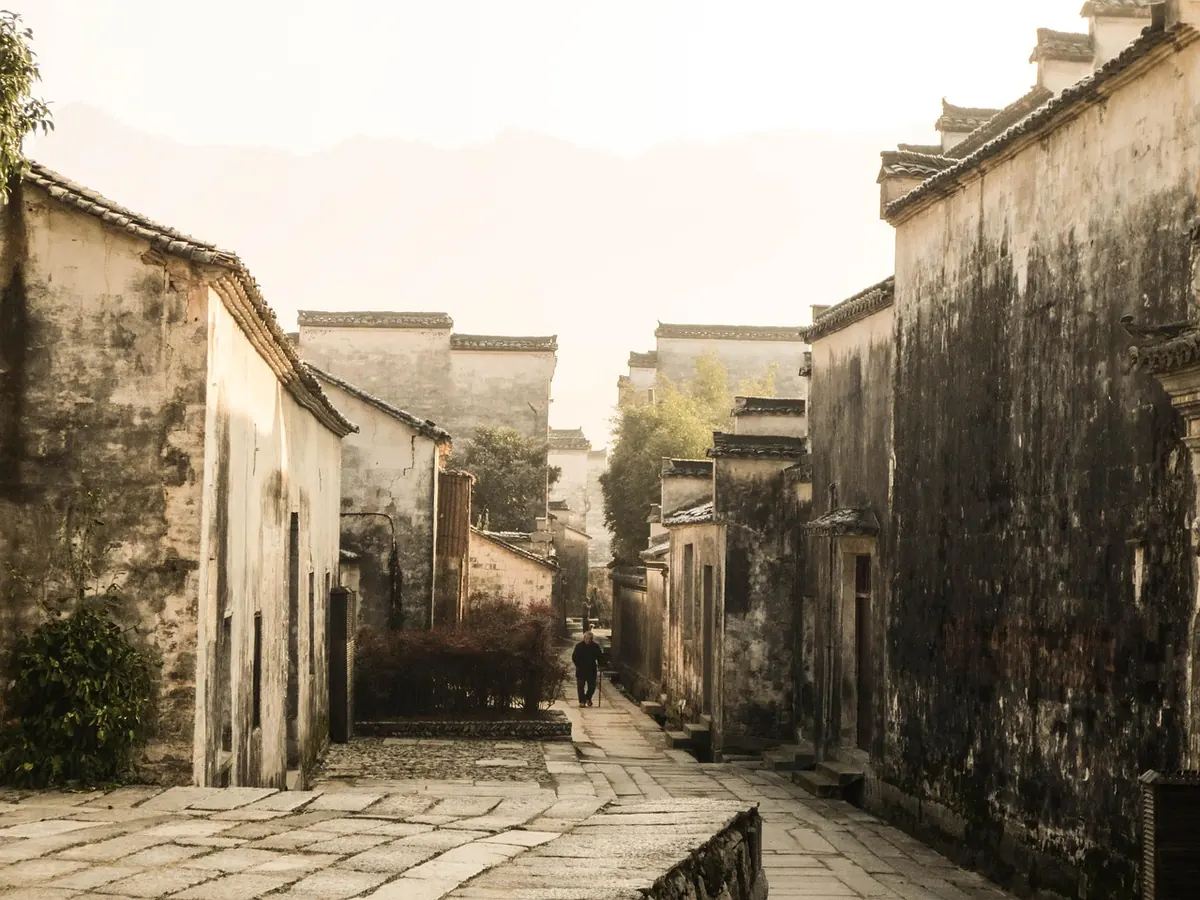
Old towns tend to come in three shapes. There is the walled circle, where almost everything loops back to a central piazza. There is the ridge town, one long corso with lanes falling away on both sides. And there is the hill town, where streets are switchbacks and staircases stacked up towards a duomo or a castle at the top. Each shape asks for a different route, and knowing which one you are standing in saves you an hour of wrong turns.
Three questions to ask the map
- Where is the spine? The main street, usually the one with the shops, the bank and the pharmacy.
- Where is the top? The duomo, the tower, the terrace with the view. This is your destination even if you never go inside.
- Where are the gates? The old doors in the walls, or the points where the historic centre meets the modern ring road.
Answer those three and you already have a route skeleton. Everything else is decoration.
Measure the Walk in Minutes, Not Kilometres
Six hundred metres sounds like nothing. On a flat grid it is eight minutes. In a hill town it is two flights of steps, a slope of polished cobbles and a pause to catch your breath, which is closer to twenty. So plan in minutes and be generous with yourself.
For a first walk, budget ninety minutes to two hours of actual moving, plus whatever you spend standing still. That is enough to see a small town properly and short enough that you still like each other at the end. A sensible shape is this: follow the spine to the far gate, climb to the highest lanes, loop once around the top, then come down by a different street from the one you went up. Descending a new way feels like getting twice the town for the same effort.
Shoes matter more than you expect. These cobbles have been polished by centuries of feet and turn slick in the slightest damp. Smooth soles are a bad idea; something with grip and a closed toe is not.
Steer by Landmarks You Can See Over the Roofs
The landmarks worth memorising are the ones that stick up: a bell tower, a dome, a castle keep, a thin cypress in a convent garden. Vertical beats horizontal every time. In a maze of three-metre lanes you cannot see a piazza, but you can usually see the campanile.
Choose three — one near the start, one in the middle, one at the end — and describe your route in terms of them. Keep the tower on my left shoulder until the fountain, then climb with the dome in front of me. That is a route you cannot lose, even with a dead phone.
For the second tier, pick fixed and unmistakable things that are open: the bar on the piazza, the pharmacy with the green cross, the church with the unfinished brick facade. Shop names change, but that corner stays a corner. And count your turns out loud as you go. "Second arch on the right" is something you will still remember in twenty minutes; the colour of the wall you passed is not.
Plan the Unglamorous Stops: Water, Bathrooms, Shade
Nobody's dream of Italy includes a toilet map. Everybody's bad afternoon does. Sort these out before you set off and the walk stays relaxed.
- Bathrooms. Use one before you leave. Inside the historic centre, the dependable option is a bar: order a coffee or a bottle of water, use the bathroom, and leave a coin or two if there is a tray. Towns sometimes have public toilets near the tourist office or the main car park, but hours are unpredictable and they are often shut at lunchtime. Carry small change.
- Water. Bring a bottle. Many towns have a fontanella, a public drinking fountain where locals fill up on their way past. If you are unsure about a particular one, ask at a bar rather than guessing. In summer, drink more than you think you need.
- Shade and seats. Put the exposed stretch — the walls, the belvedere, the long flight of steps — at the start or the end of the day. Note the church steps and the bench under the plane trees while you are still fresh.
- Opening hours. In smaller towns, churches and shops often close around lunchtime and reopen mid-afternoon, and hours shift with the season. Check the notice on the church door or the town website the day before. Do not build a route around a door you have not confirmed.
Keep a Backup Street in Your Pocket
Every good alley walk has an escape hatch. The first rule is simple: a lane that narrows, has a doormat and a potted basil plant is not a lane, it is someone's driveway. Turn around. The detour costs three minutes.
The second rule is to know your spine. Whatever happens, you can usually walk downhill in a hill town and reach a gate or the ring road, and you can usually walk towards the tower and reach the piazza. Those two bearings will get you out of almost anything.
The third is to name a bail-out point before you need one. Choose the bar in the piazza: if the heat or your knees get the better of you, that is where you stop, and the walk is still a success rather than a forced march. The fourth is to ask. La piazza? with a smile works everywhere, and locals give directions by landmark rather than by street name, which is exactly how you have been thinking anyway.
Your One-Page Plan, and a Few Last Things
The night before, write the whole thing on a single page or a note on your phone. Five lines is plenty:
- Start point and the time you will set off.
- The three landmarks, in order.
- Your estimated walking time, plus thirty minutes.
- The bathroom and water stops.
- The backup street and the bail-out point.
Then check the weather, charge your phone and download the offline map, put coins and a bottle in your bag, and leave your shoes by the door. If you are walking alone, tell someone roughly where you are going and when you expect to be back.
One sensible note: old towns are staircases with a view. If you have heart, knee or balance problems, or you are planning to walk in high summer heat, get proper advice from a doctor before you build a route around steep lanes.
Beyond that, leave room for the unplanned part. The best twenty minutes of the walk are usually the ones you did not write down — the courtyard you were not supposed to find, the second coffee you did not need. Plan the frame, then let the town fill it in.
Photo: TomasHa73 / Pixabay