Hidden Courtyards of Italian Old Towns: A Checklist for Spotting Public vs. Private Spaces
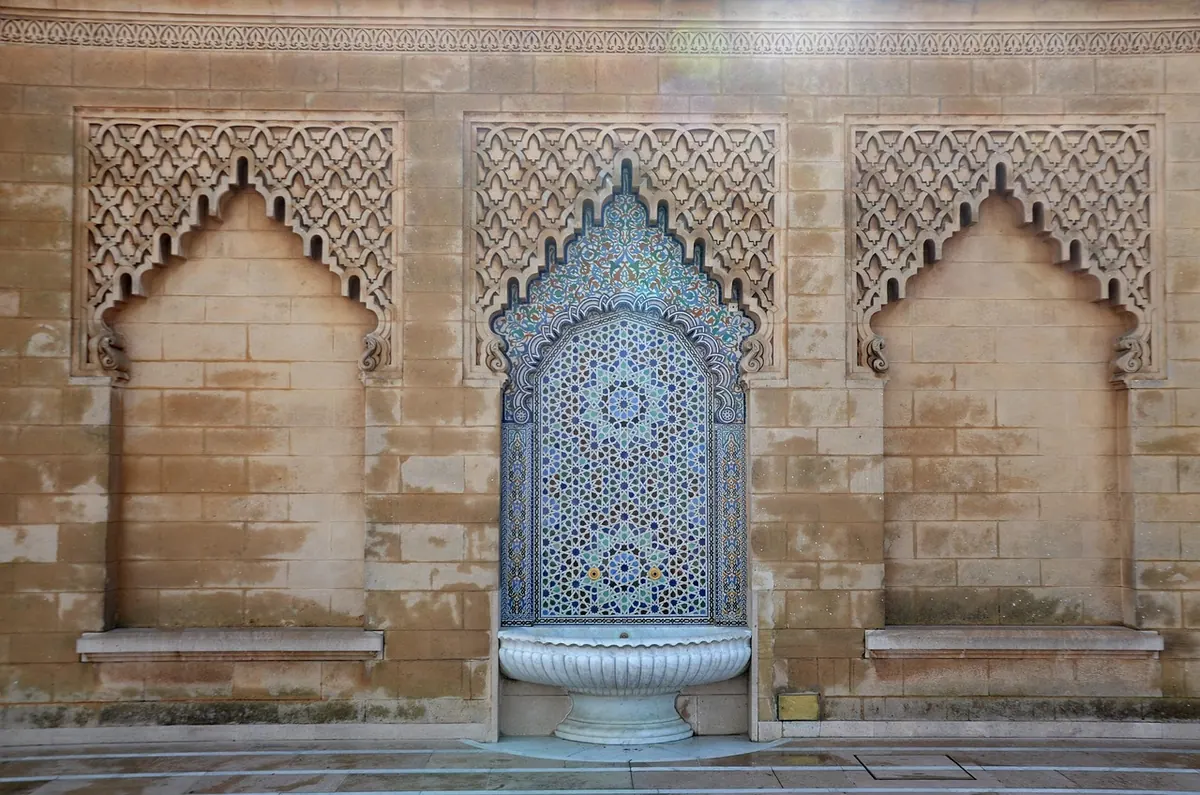
In almost every Italian old town there comes a moment when the street narrows, the light drops, and a dark rectangle of an open doorway invites you in. Sometimes it leads to a hallway shared by six families; sometimes it opens onto a courtyard with a lemon tree in a bucket and a cat asleep on a scooter cover. The difference between the two is not always marked by a sign. Learning to read it is one of the quiet skills of travelling here, and it keeps you on the right side of the people who actually live behind those doors.
Start at the Threshold, Not Inside It
Italian buildings tend to be very clear about boundaries if you know where to look. The soglia — the threshold stone — is often a different material or colour from the pavement outside, and it is meant to be a line, not a decoration. Stand on the street side of it and look before you move.
A doorway with a mat, a chain, a rubber draught strip or a curtained glass door is a doorstep, not an entrance. So is a door that stands open only because someone propped it with a brick at eight in the morning and will close it at noon.
The androne is a passage, not a public space
In larger palazzi the street door opens into an androne: a tall covered corridor that leads to an inner courtyard, sometimes with a porter's lodge (portineria) on one side. Because people walk through it constantly, it can feel like a covered street. It usually isn't. Think of it as someone's hallway that happens to be long. A glance from the threshold is normal courtesy; a slow walk to the far end is a small intrusion.
Five Cues That Tell You What You Are Looking At
- The street door. A heavy wooden door with a brass handle worn smooth, standing ajar, is usually residential. A wide opening with no door at all — or a door pinned open with a sign beside it — is more likely a passage, a civic building or a shop entrance.
- The ground. Cobbles that continue from the street into the courtyard suggest a route through. Smooth paving, gravel, a raised step or a change of level suggests a private floor.
- The intercom and letterboxes. A citofono panel with eight surnames and a row of brass name slots means homes, and homes mean private. A single plate with an institution's name means knock and ask.
- The signs. Small printed notices are common and easy to miss: privato, proprietà privata, condominiale, si prega di chiudere la porta. Take them literally.
- The life in it. Washing strung at head height, plastic chairs, bicycle racks, numbered parking spaces, a bowl of water for cats: this is a place where people live, and your presence changes it.
The Words on the Wall Do Most of the Work
A handful of terms will carry you a long way, even with no Italian beyond a greeting.
- Cortile or corte — courtyard. Frequently private, though not always.
- Chiostro — cloister. Often open during published hours if it belongs to a church or a civic building; closed and grilled if the community is still there.
- Androne and bussola — the entrance corridor and the glazed lobby behind the front door. Both signal a building with residents.
- Vicolo — alley. Even a narrow dead end is a public street unless a gate physically blocks it.
- Piazzetta — small square. Public, even when it feels like a room.
Two words worth memorising before you go: privato and aperto al pubblico. One closes a door; the other opens it.
Which Courtyards Are Usually Open
Some courtyards are built for visitors. Cloisters attached to churches and museums, courtyards of town halls and libraries, courtyards with a bar or a bookshop inside them, former convents converted into civic space — these are generally fine to enter within posted hours, and often have a bench and a fountain to prove it. So are the accidental courtyards you find in southern towns where a lane simply widens and the wash lines belong to three different buildings but the ground is still public.
Others are almost never open, and it pays to assume so:
- A courtyard behind an unlocked wooden door in a residential block, even if the door is ajar.
- Anything with a second gate at the far end, or a staircase running up from the courtyard to front doors.
- Courtyards with numbered parking spots, scooters and bins lined up along one wall.
- Cloisters behind a grille, which usually indicate a closed religious community.
An open door is often a courtesy to residents, not an invitation to strangers. That distinction is the whole game.
Asking Is a Skill, Not a Failure
The cheapest way to resolve doubt is a person. Ask the barista whose terrace faces the doorway, the woman sweeping the step, the newsagent. In small towns, whoever is closest usually knows whose courtyard it is and whether the owner minds.
Keep it short and easy to refuse. Buongiorno, si può entrare a vedere il cortile? Or simply: Scusi, è privato? If they say yes, thank them and step back — no second attempt, no persuasive follow-up. A shrug is not permission. A wave of the hand towards the door usually is.
Timing helps. Mid-morning is a good moment: doors are open for deliveries, people are out, and nobody is eating. Avoid the long lunch hour and late evening, when the same courtyard belongs entirely to the families inside it.
How to Look Without Intruding
- Stop on the threshold and look first. Many courtyards give you everything — the arch, the well, the loggia — from the doorway.
- Check where your body would be. If stepping inside puts you in front of someone's kitchen window, don't step inside.
- Keep your voice at street level. Sound behaves strangely in enclosed stone, and a normal speaking voice travels up three floors.
- Photograph the architecture, not the residents. Not the laundry, not the children, not the man in the undershirt. Ask before photographing anyone holding something or doing something.
- Never climb stairs, open an inner door, or pass a second gate. Those are the actual homes.
- Two or three minutes is plenty in a residential courtyard. Longer is a visit, and a visit needs an invitation.
- If someone appears, greet them — buongiorno — and if their face is uncertain, step back out and say grazie. That retreat does more for travellers than any photograph.
Don't sit on steps, don't eat, don't leave litter, and don't block the door for someone carrying shopping.
A Short Checklist Before You Cross a Threshold
If the door is on a public building or a church with posted hours, go in. If there is a bar, shop or office inside, go in — and buy something. If you can see the courtyard clearly from the pavement, enjoy it from there. If it is a residential block with a nameplate panel and washing above your head, ask someone nearby, and accept the answer you get.
Access rules vary from town to town and from building to building, and local habits are not a reliable substitute for permission. If it matters — a photo project, a research visit, anything more than a glance — ask the owner or the comune's information office rather than guessing. When you truly cannot tell, assume it is private. The courtyards you are welcome in will make themselves known, usually with a bench, a fountain, and somebody who says prego.
Photo: bouassa / Pixabay