How to Photograph Narrow Italian Alleys Without Blocking Residents
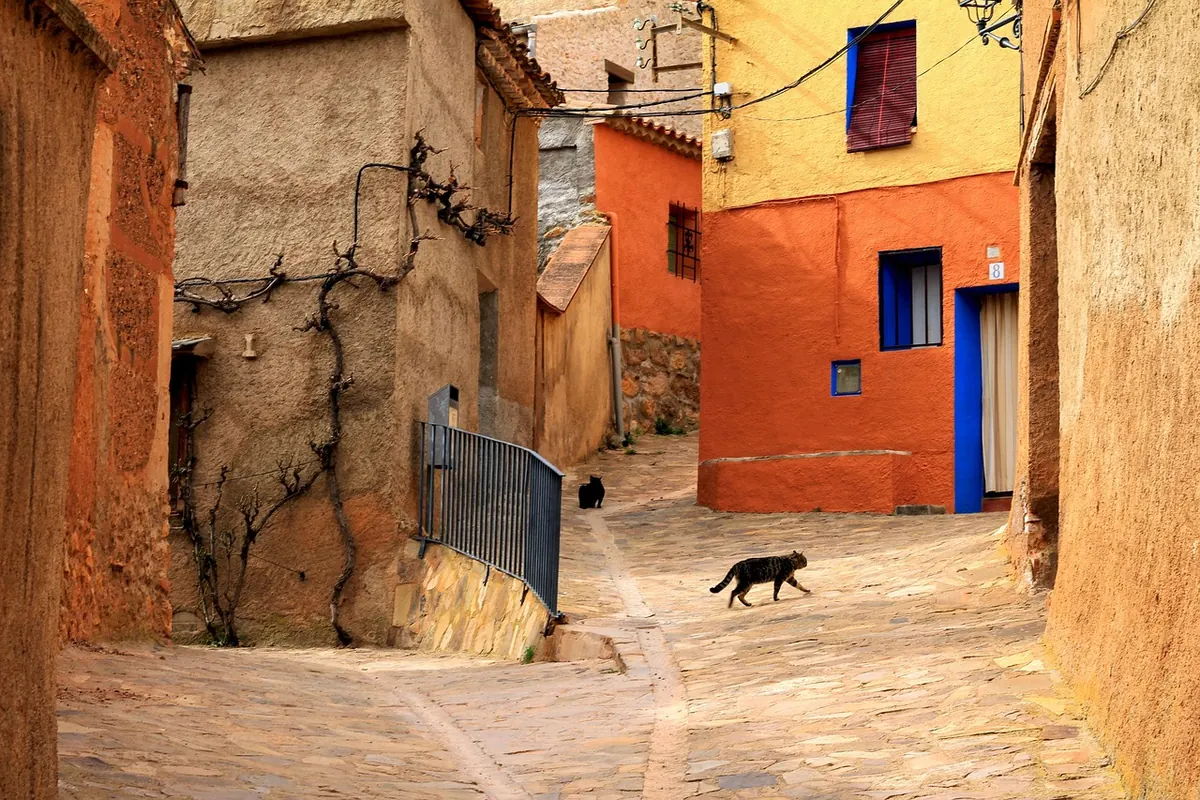
The first time you step into a narrow Italian alley, the instinct is to stop dead in the middle of it and lift the camera. Understandable. The light falls in slices, the laundry shifts, a cat works its way along a windowsill. But behind you someone is carrying two bags of shopping home, and a scooter is idling, waiting for you to move. Photographing these streets well is mostly a question of where you stand and when you go. The pictures get better when you get out of the way.
An Alley Is a Hallway, Not a Film Set
In much of Italy, the lane is not a decorative leftover between buildings. It is the shared corridor of the neighbourhood. Ground-floor rooms open straight onto it in Naples' Quartieri Spagnoli or Genoa's caruggi; in Bari Vecchia, a doorway is often two steps from a chair, a basin, a conversation. People walk it to the bakery, to work, to the church at the end, and they walk it several times a day.
That single idea solves most of the etiquette problem. If you would not plant yourself in the middle of a hotel corridor with a camera, don't do it in a vicolo. You are a guest in a passage that belongs to other people's mornings. Behave like someone visiting a house, and nobody will mind you being there.
Choosing Your Hour
Narrow streets are forgiving of bad light and unforgiving of bad timing. The same lane can be empty, then frantic, then empty again inside forty minutes.
Early, before the shutters go up
Roughly the first hour after sunrise, depending on the season, the alleys belong to delivery vans, street sweepers and the first coffee run. The light is soft and it reaches the upper walls first. You will see fewer people, but the ones out are working, so stay close to the edges. The genuinely quiet window usually comes just after the early rush and before the shops fully open.
Midday, when the lane goes dark
Around noon a narrow north–south alley can turn into a slot of shade, which is beautiful for details and hopeless for wide views. It is also the hour when shutters close and residents rest. Keep your voice down, keep your shutter quiet, and treat an empty lane as a sign that people are sleeping behind the walls.
Late afternoon and evening
This is when light bounces off one wall and warms the other, and when the passeggiata fills the street. The light is at its best; the traffic is at its worst. Shoot from a fixed spot at the side and let the lane move past you, rather than chasing it.
Read the Lane Before You Raise the Camera
Stand still for thirty seconds without taking a picture. Count the doorways. Notice where scooters are parked and where bins are set out. Find the pinch points — the corner where a car and a pedestrian cannot both pass, the arch that narrows the way. Watch how people move: most lanes have a rhythm, with a natural pause after each small group goes through.
That half-minute tells you where to stand and where you must never stop. It also tells you which direction the light is coming from, whether the walls are damp, and where the eye is drawn. Nearly every good frame in a vicolo comes from a spot you chose before lifting the camera, not one you discovered halfway through a shot.
Where to Stand, and How to Hold Yourself
Flatten yourself against a wall and shoot along it rather than across the lane. A camera held at chest height, angled down the street, reads as a person standing still — not as a barrier. If someone approaches, turn sideways or step into an empty doorway recess, camera down, and let them pass. Never into a doorway that has a person standing in it.
A tripod across a narrow alley is a genuine obstruction and will annoy people quickly. If you need stability, brace against the wall, use a faster shutter, or come back at a quieter hour. Small cameras and phones also help here, simply because they let you take the frame and move in three seconds instead of thirty. Big lenses invite conversations you may not want and make you slower than the street can tolerate.
Keep your bag in front of you rather than swinging behind. And leave one ear free — half of alley etiquette is hearing the scooter before you see it.
The Words You Actually Need
You do not need much Italian, but you do need a tone. Buongiorno when you enter a lane where people are sitting out. Scusi as you edge past someone. Grazie afterwards, with a nod. If you want to photograph a person, hold up the camera slightly and raise your eyebrows: Posso? The answer may be no, and that is fine — smile, put the camera down, and move on.
Ask before photographing faces, workshops, kitchens and market stalls. A shopkeeper will often say yes if you ask while they are not busy and step back to let them work. The same person will shut down if you shoot first and explain later. When someone waves you off, accept it the first time and do not negotiate.
Stand at the side, shoot along the wall, and let the alley do the moving.
What to Leave Alone
Most damage in narrow lanes is done by small, well-meant adjustments. A crate moved out of a shot, a chair shifted, a door propped open for light. Resist all of it. The street is arranged the way it is because somebody uses it that way.
- Do not move bins, crates, chairs, plants or drying racks to improve a composition.
- Do not photograph into open doorways, ground-floor windows or courtyards — those are living rooms, not sets.
- Do not duck under laundry with your head in it; walk around, or wait.
- Do not photograph children, even from a distance, without a parent's clear agreement.
- Do not block a doorway, a step or a shop entrance while you review your shots on the screen.
- Do not treat residents as props: no directing, no asking them to stand in the light, no repeat requests.
A detail frame of a numbered door, a worn step, a bicycle against a wall will often make a better photograph than another crowded wide shot, and it costs nobody their morning.
A Ten-Minute Routine That Works
Walk the lane once with the camera away. Choose two or three spots where you can stand without touching anyone's path. Then work them properly: wait for a gap in the traffic, take four or five frames, and step back against the wall to look at them. When the lane gets busy, move on and come back later.
Fifty frames from one patch of shadow beat five hundred from the middle of the street, and you will leave with better pictures and a friendlier neighbourhood behind you. If a resident pauses to ask what you are shooting, tell them the truth in plain words — the light, the shutters, the shape of the lane — and thank them. That short exchange is part of the story too.
Photo: Daniel_Nebreda / Pixabay